Seattle, Washington

Robert McDermott

I'm a technologist, architect and engineer who enjoys open-source software and using technology to solve problems.

Based in Seattle, I've spent several years supporting scientific research with computing and software. Outside of work, I build open-source research software, plus self-hosted AI platforms and tools, as personal projects, and I write about what I learn along the way.

Portrait of Robert McDermott

01Featured projects

My open-source projects

Personal projects, built on my own time. Each is a complete, documented application: free, open source under Apache 2.0, and built to run on your own hardware.

Scientific workbenches

robert-mcdermott.github.io/cytoweave
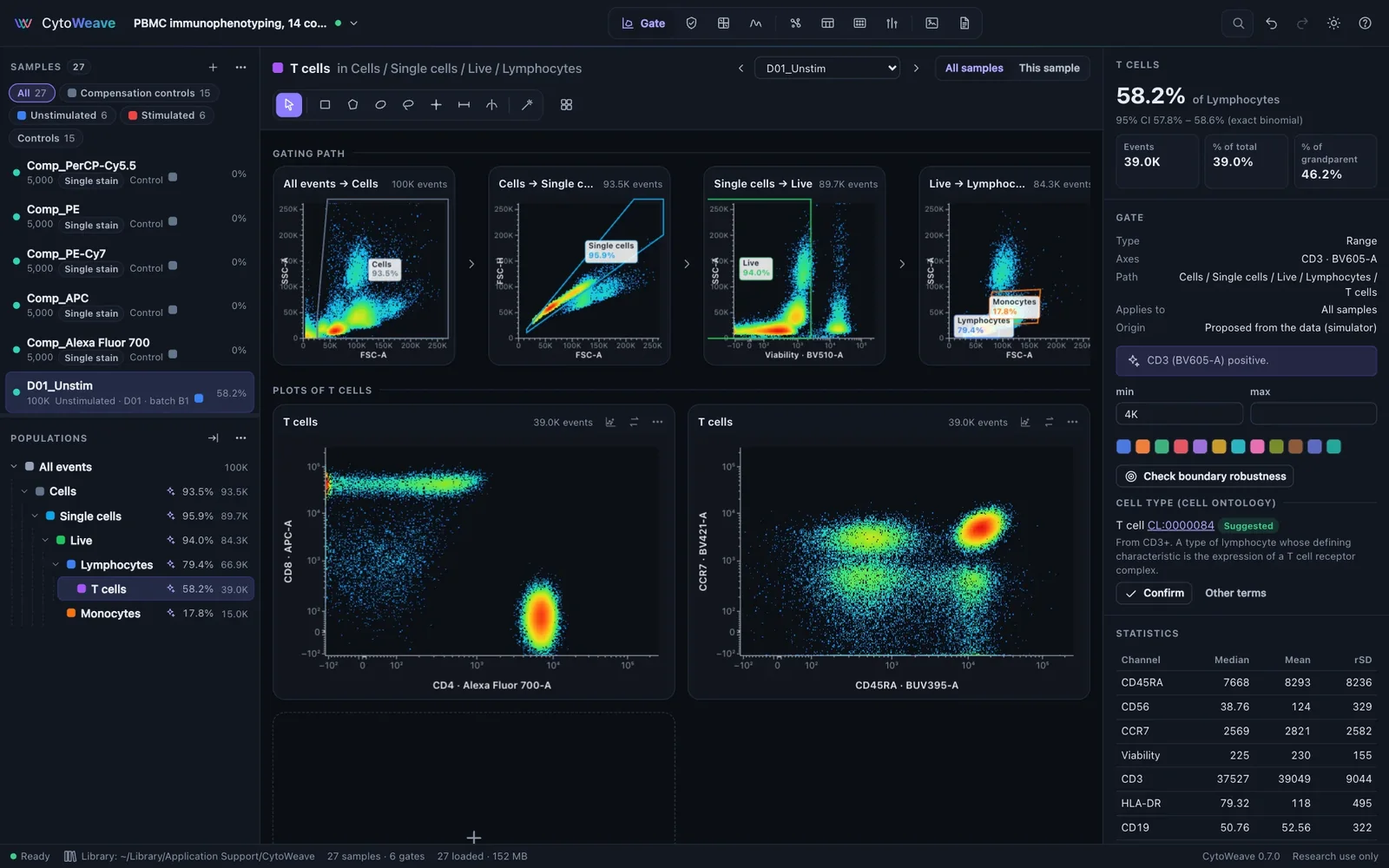
CytoWeave's gating view: a T-cell gating path in a 14-color PBMC experiment, with density plots and population statistics.
Flow cytometryv0.8.1

CytoWeave

Flow cytometry analysis you can check.

A workbench for conventional, spectral and mass cytometry that takes an experiment from raw FCS files to publication figures in one self-contained program, on your own computer.

  • Gating, compensation, spectral unmixing and QC
  • Clustering, UMAP, statistics and publication figures
  • Reads and writes FlowJo workspaces and Gating-ML
  • MCP server for AI agents, plus Python and R clients
robert-mcdermott.github.io/proteoscope
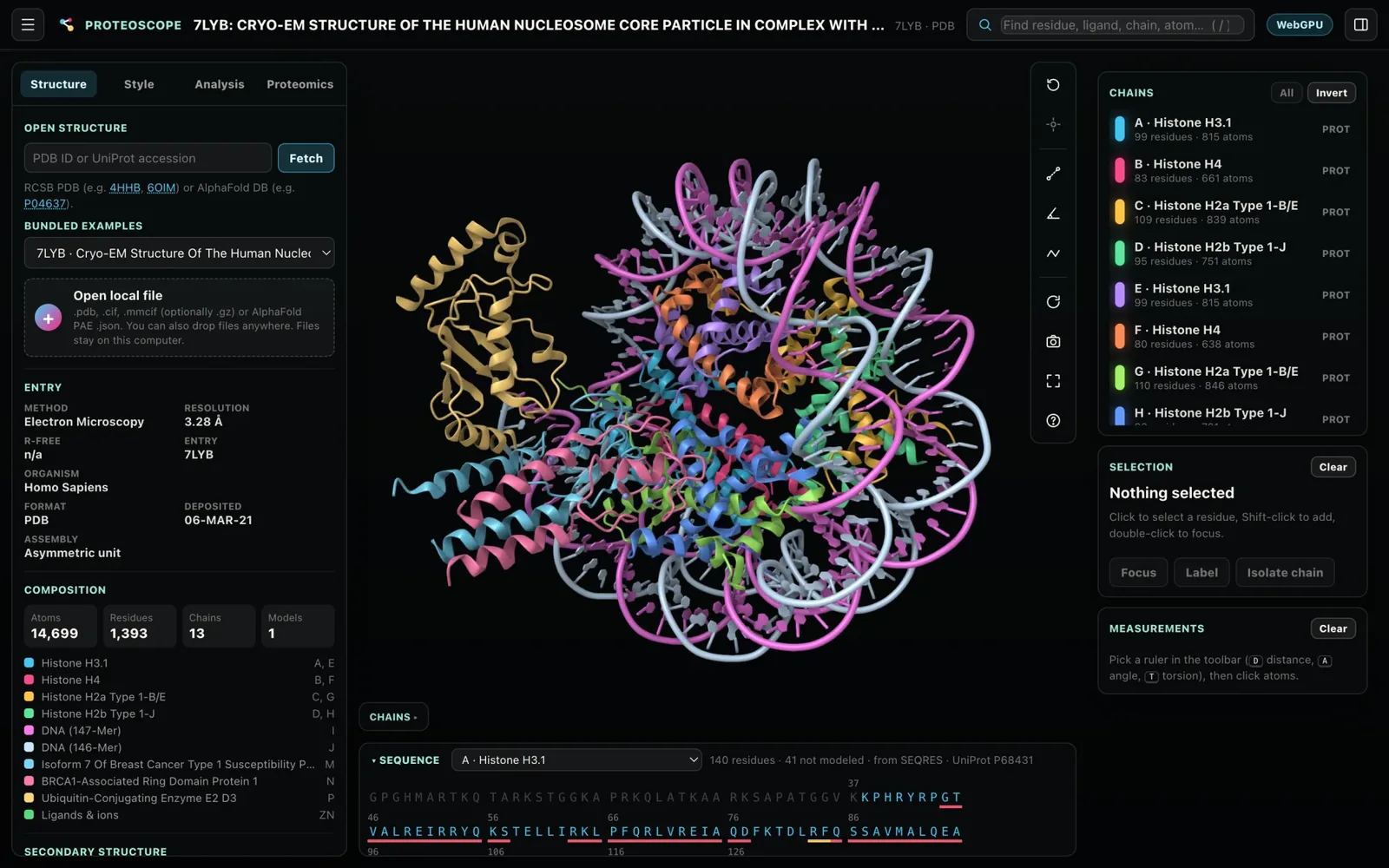
Proteoscope showing a cryo-EM structure of the human nucleosome core particle in 3D, with chain list and sequence track.
Structural biologyv0.10.0

Proteoscope

Explore, check and explain protein structures.

A 3D viewer and analysis workbench for protein and nucleic-acid structures, predicted complexes, density maps and structural proteomics data. Installed with one command; your files never leave your machine.

  • Finds structures by gene, name, UniProt or sequence across RCSB PDB, PDBe and AlphaFold DB
  • Ranks AlphaFold 3, Boltz, Chai-1 and ColabFold predictions with ipSAE, pDockQ2 and LIS
  • Binding-site interactions and LigPlot-style 2D ligand diagrams
  • Checks models against density maps and wwPDB validation reports
robert-mcdermott.github.io/MaveScape
MaveScape's variant-effect map of the GRB2 SH3 domain: positions across, amino-acid substitutions down, colored from less abundant to more, with one variant's evidence in the inspector.
Deep mutational scanningv0.8.0

MaveScape

Variant-effect scores you can check.

A workbench for multiplexed assays of variant effect. It turns the count tables from a deep mutational scan into functional scores with standard errors, quality control that says when not to trust them, and a variant-effect map linked to the protein's structure, all on your own computer.

  • Reads MaveDB, Enrich2, DiMSum and dms_variants tables, including time series, sorted bins and barcodes
  • Scores that match Enrich2 and dms_variants, with intervals checked on simulated experiments
  • Twelve QC findings, plus comparisons and checks of each conclusion against other analysis choices
  • Maps scores onto PDB and AlphaFold structures and, for research, calibrates them against variants of known effect
  • Figures, verifiable certificates and MaveDB deposits, plus an MCP server and Python and R clients
robert-mcdermott.github.io/situcraft
SituCraft's Cell types view of 10x Genomics' Xenium human Breast example: a map of the cells' clusters beside the tissue, linked, with the selected T cells highlighted in both.
Spatial transcriptomicsv0.9.0

SituCraft

Spatial transcriptomics you can check.

A local-first workbench for imaging-based spatial transcriptomics, starting with 10x Genomics Xenium. It takes a run from a checked bundle through cell segmentation, cell types, the H&E and spatial statistics to groups of subjects compared, all on your own computer.

  • Checks each Xenium bundle before use, recomputing the run's recorded values from its data
  • Makes, compares and decides cell segmentations, including its own from the transcripts
  • Labels cell types, places the post-Xenium H&E on the tissue, and maps how the tissue is organized
  • Compares groups of samples with the subject, not the cell, as the unit
  • Figures, reports and a methods section from the record, plus an MCP server for AI agents and Python and R clients
Screenshot data: 10x Genomics Xenium example, CC BY 4.0.

robert-mcdermott.github.io/clonoloom
ClonoLoom's Repertoire view of a simulated TRB study of twelve samples: each sample's Shannon diversity with its 95% interval, the Hill profile, and clonal space homeostasis.
Immune repertoiresv0.9.0

ClonoLoom

Immune repertoires you can check.

A desktop workbench for researchers studying T- and B-cell receptor repertoires: compare samples and study groups, measure diversity, track clones over time, explore B-cell families and mutations, and connect receptors with single-cell expression and cell states. It runs on your own computer, with no account, Python or R.

  • Reads AIRR, Cell Ranger V(D)J and immunoSEQ data, with clonotypes defined by a rule you can see
  • Diversity, gene usage and overlap, each with its uncertainty, and clones followed over time
  • B-cell clonal families, somatic hypermutation and lineage trees, plus receptor specificity
  • Single-cell expression maps and phenotypes for each clonotype, with AnnData export
  • Figures, reports and cited methods from the record, plus an MCP server and Python and R clients

Research operations

robert-mcdermott.github.io/tessera
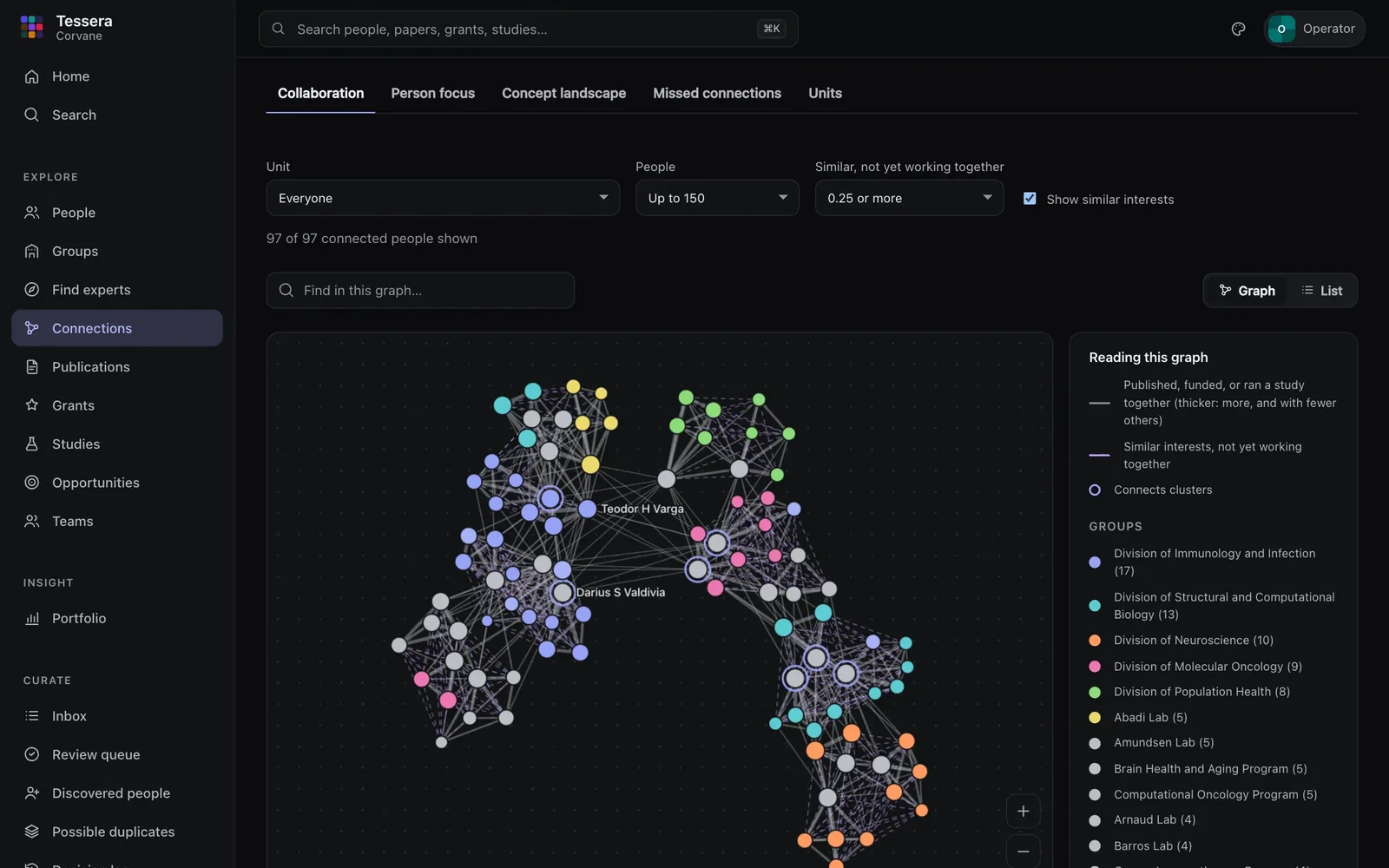
Tessera's collaboration network for an invented research institute: people colored by division and linked by shared papers, grants and studies, with a legend of the groups.
Research intelligencev1.0.0

Tessera

Every contribution, connected.

Open research intelligence for academic research organizations. It builds an organization's people, publications, grants and clinical studies from public data and links them with the evidence behind every connection, on a laptop or a single server.

  • Starts from PubMed, NIH RePORTER, ClinicalTrials.gov and ORCID, with no HR feeds or integrations
  • Every suggested link shows its evidence; curators confirm it, and their decisions survive each refresh
  • Finds who works on what, maps collaboration, and suggests who should meet
  • Researcher profiles that build current CVs and NIH biosketches
  • Portfolio reports that say what each figure counts, what followed each grant, and which funding fits
robert-mcdermott.github.io/pinax
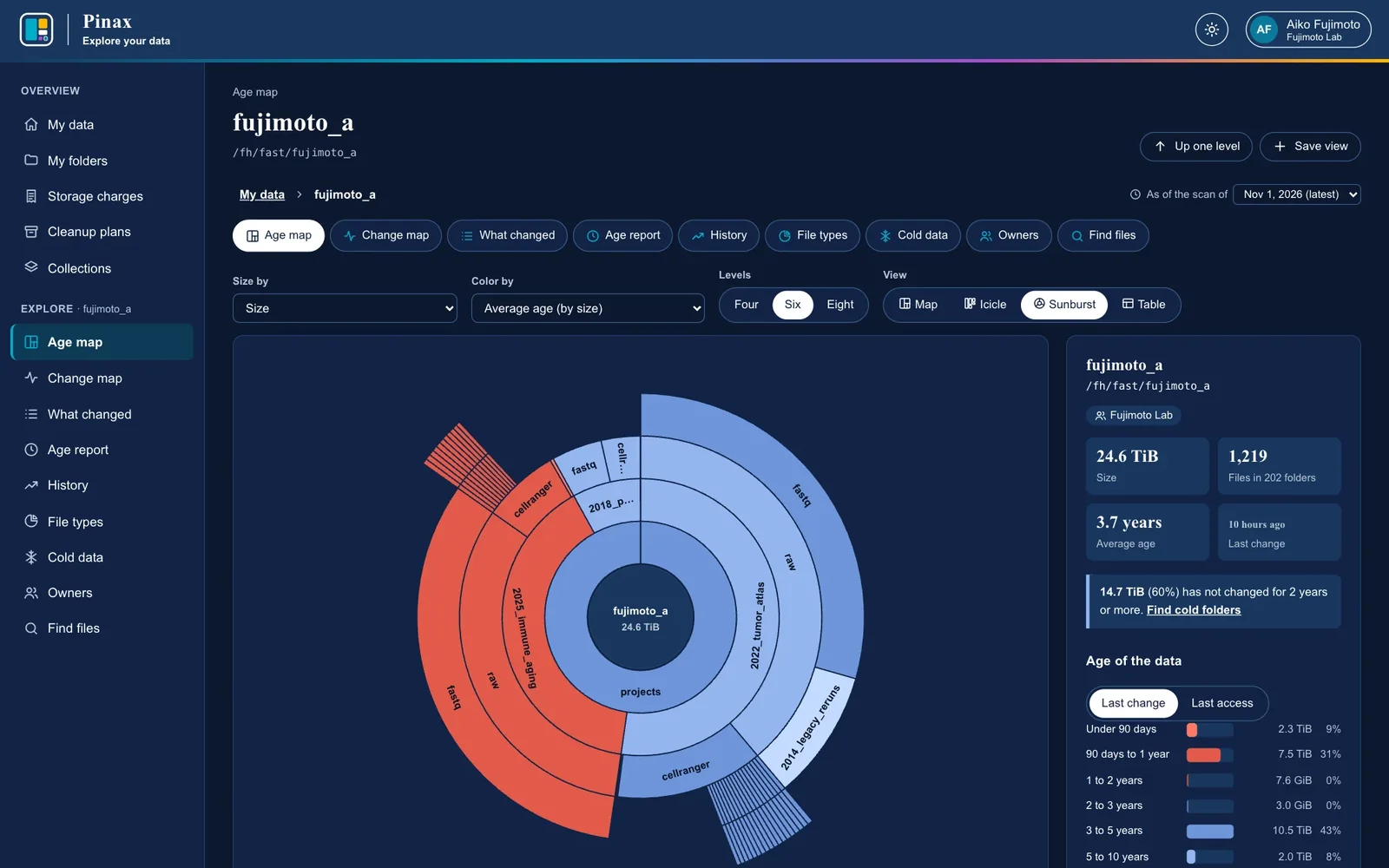
Pinax's age map of a lab's folder as a sunburst: each ring a level deeper, sized by how much it holds and colored by average age, with the folder's totals and age profile beside it.
Storage reportingv0.14.0

Pinax

See what your research storage holds, and what it costs.

File system reporting for research storage with billions of files. It turns fs-inventory scans into reports that each lab can explore for its own folders and that IT can check, directory by directory. It only reads scans: it never opens, moves or deletes a file.

  • Age maps as treemaps, icicles or sunbursts that show large, old data at a glance
  • History, change maps and capacity forecasts across scans
  • Monthly storage charges each lab can follow, and cleanup plans that show what they would save
  • Each lab sees only its own folders, with roles, Entra ID sign-in and an audit log
fs-inventory — ~
# inventory a tree, check it, add subtree totals
$ fs-inventory scan /data/projects -o /scratch/inventory/projects-2026-10-25
fs-inventory: complete: 285 entries in 0:00:00 (33.3k/s), 35 dirs, 44.02 GiB, 1 error, …
$ fs-inventory verify /scratch/inventory/projects-2026-10-25
ok
$ fs-inventory rollup /scratch/inventory/projects-2026-10-25

# query it with DuckDB
$ duckdb -c "SELECT kind, count(*) FROM read_parquet(
    '/scratch/inventory/projects-2026-10-25/entries/*.parquet')
    GROUP BY kind"
File system inventoryv1.0.0

fs-inventory

A fast, parallel inventory of very large file systems.

A command-line crawler for file systems with hundreds of millions to billions of files, on local disks, NFS and Lustre. It records every file's metadata as Parquet, CSV or JSON Lines for analysis in DuckDB.

  • A work-stealing crawler that shares even directories of millions of entries across threads
  • Keeps every name byte for byte, and flags names that will break a migration
  • Carries on past errors and hung NFS servers, and resumes after a crash with every row exactly once
  • Subtree totals and file-age heat maps; read-only, with a static Linux binary that runs back to RHEL 7

Governance & IT management

robert-mcdermott.github.io/govwren
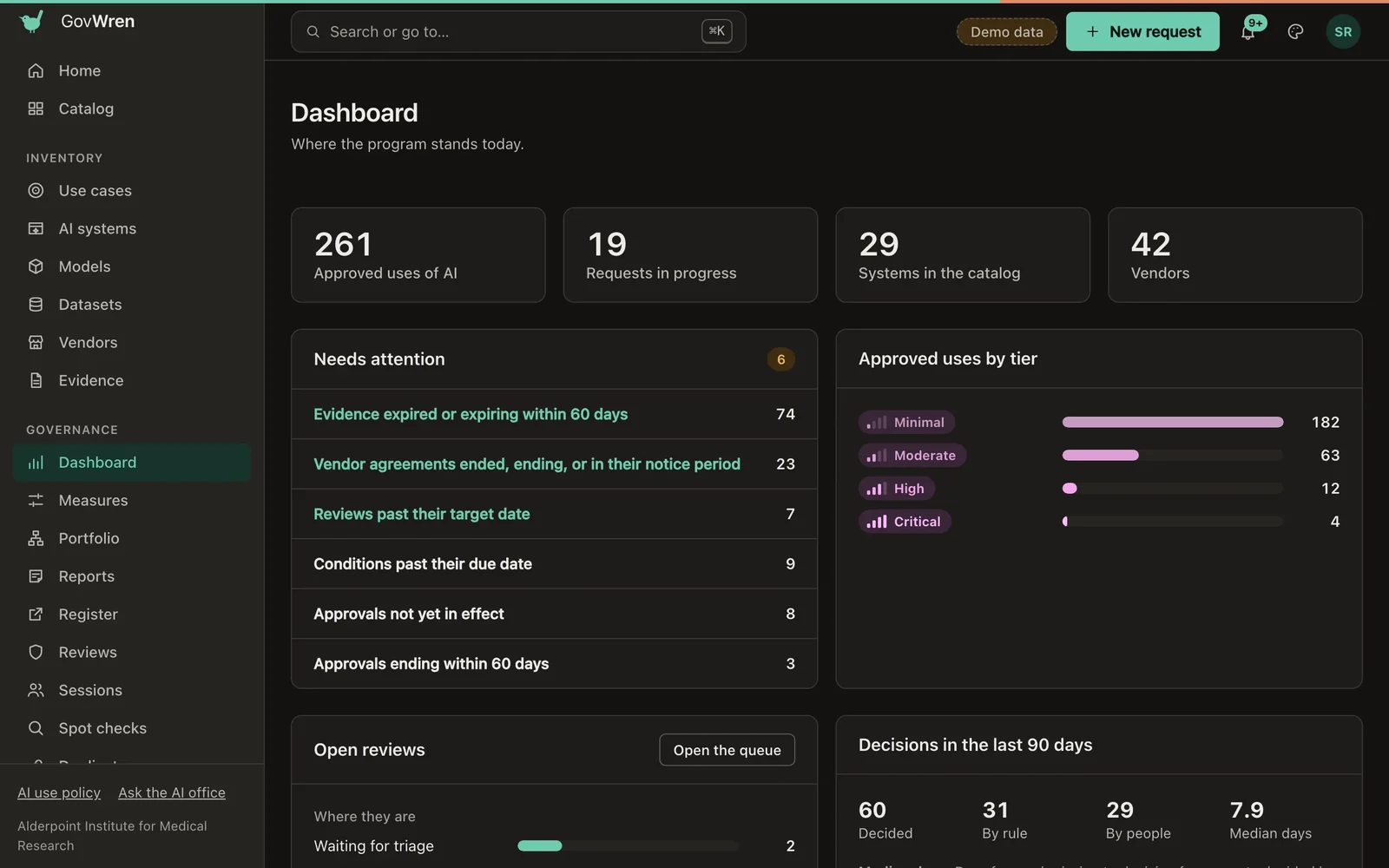
GovWren's dashboard for an invented research institute: counts of approved uses of AI, requests in progress, systems in the catalog and vendors, a list of what needs attention, and approved uses by risk tier.
AI governancev0.9.0

GovWren

AI governance people actually use.

An open system of record for AI governance, built first for research and health organizations where labs adopt AI faster than any committee can track. Every AI request comes through one front door, is reviewed in proportion to its risk, and stays on record with the evidence behind the decision.

  • A catalog that answers “may I use this?” in seconds, and registers an everyday use in a minute
  • Risk tiers that explain themselves and decide who reviews, who decides, and how often anyone looks again
  • A connected inventory of use cases, systems, models, datasets, vendors and agents
  • Renewals, attestation campaigns and incident reports that keep the inventory true as time passes
  • Evidence for NIST AI RMF, ISO/IEC 42001 and HIPAA, on an append-only history that can be verified
robert-mcdermott.github.io/riskwren
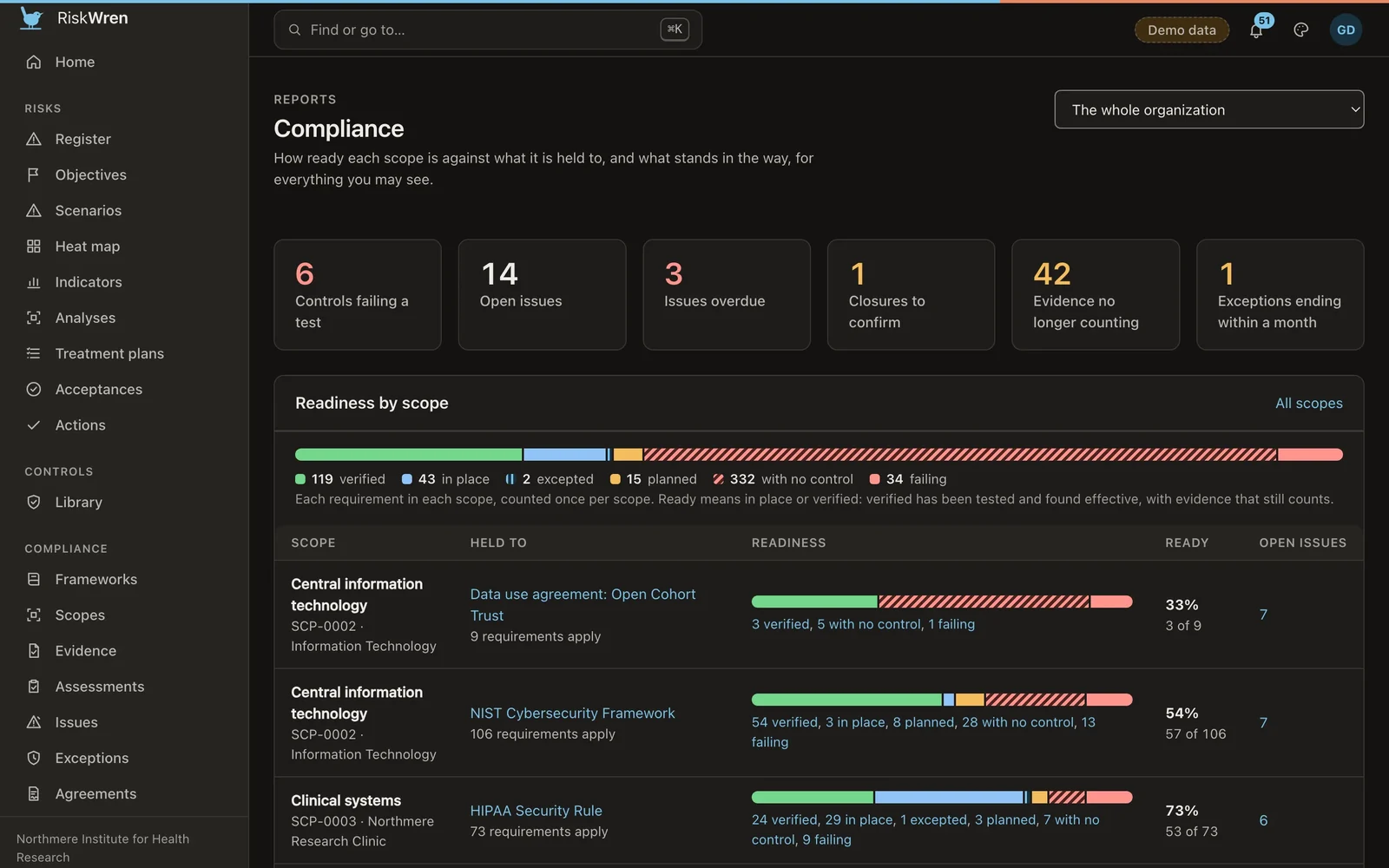
RiskWren's compliance report for an invented research institute: controls failing a test, open issues and exceptions about to end, and a readiness bar for each scope against the framework it is held to.
Risk & compliancev0.7.0

RiskWren

Risk and compliance people actually keep current.

An open system of record for governance, risk and compliance: one connected register of what an organization has, what could go wrong, what it must comply with, what it does about both, and the proof. It is built first for security teams at research and health organizations.

  • A control is described once, mapped to every requirement it answers, and tested once for every framework and scope
  • Readiness is worked out from tests and evidence that still count, never typed in
  • A second person confirms every test result, issue closure and exception
  • Issues, exceptions that end by themselves, policies, third-party reviews and internal audit in the same register
  • Arrives with a risk taxonomy, control libraries and four public frameworks already mapped
robert-mcdermott.github.io/appwren
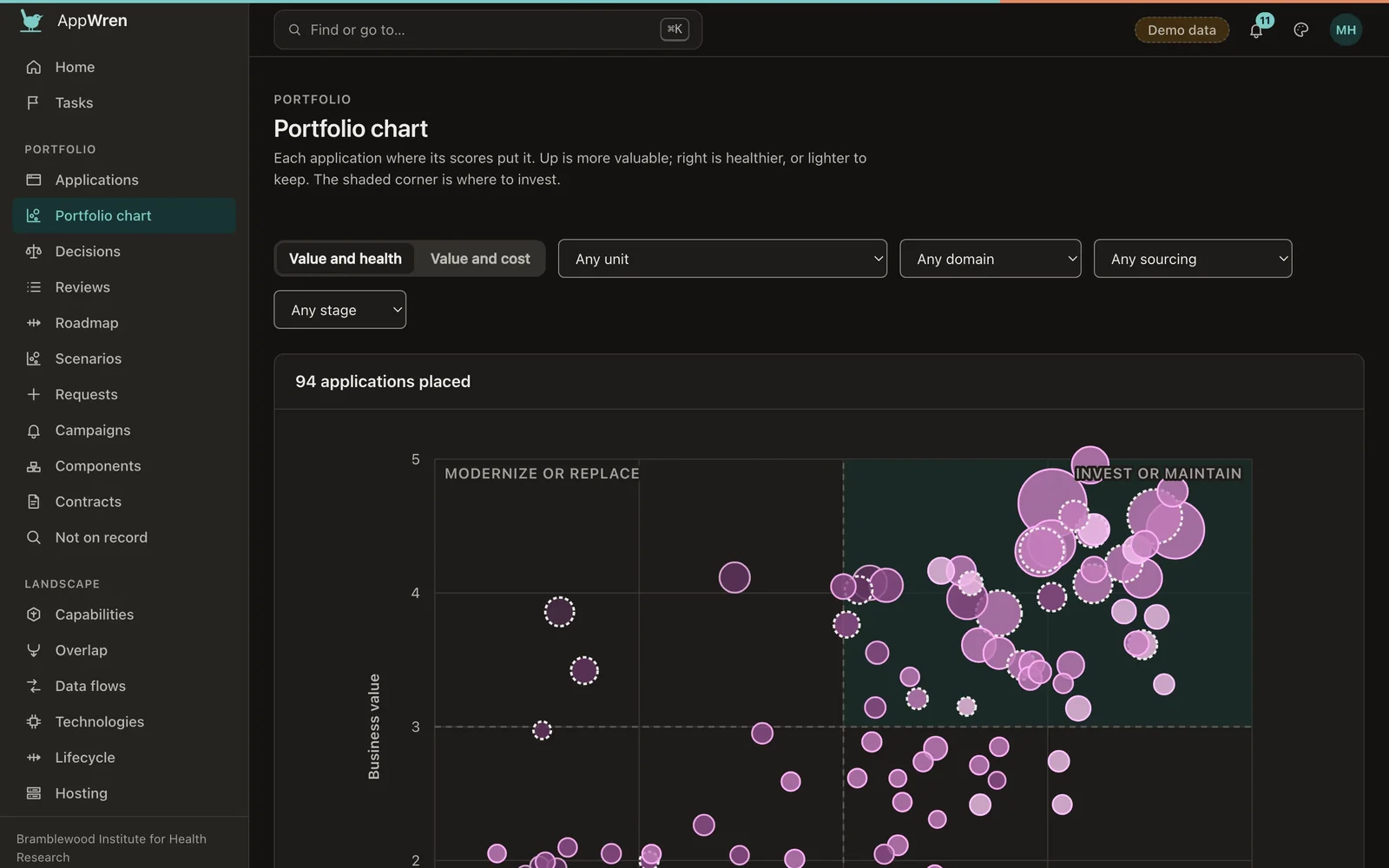
AppWren's portfolio chart for an invented research institute: each application placed by business value and technical health, sized by cost and colored by risk, with the corner to invest in shaded.
Application portfoliov0.8.0

AppWren

Know every application, and what to do with it.

Open-source application portfolio management: one living record of every application an organization runs, who answers for it, what it is built on, what it costs and how healthy it is. From that record it works out a recommendation for each one, and shows the reasoning.

  • Scores for business value, technical health, cost and risk, each opening to its factors, weights and sources
  • Recommendations from invest to retire that name the rule behind them, while a named person records the decision
  • Shows which applications overlap, and what would break before anything is retired
  • Data flows between systems, end-of-support timelines and a roadmap for planned change
  • Missing facts lower confidence instead of being guessed, and owners confirm their records on a schedule

AI platforms & tools

robert-mcdermott.github.io/ai-knowledge-graph
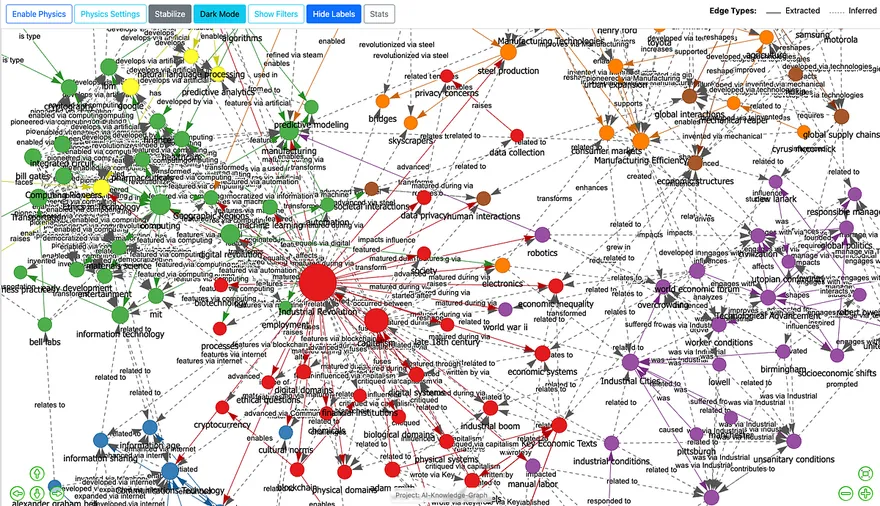
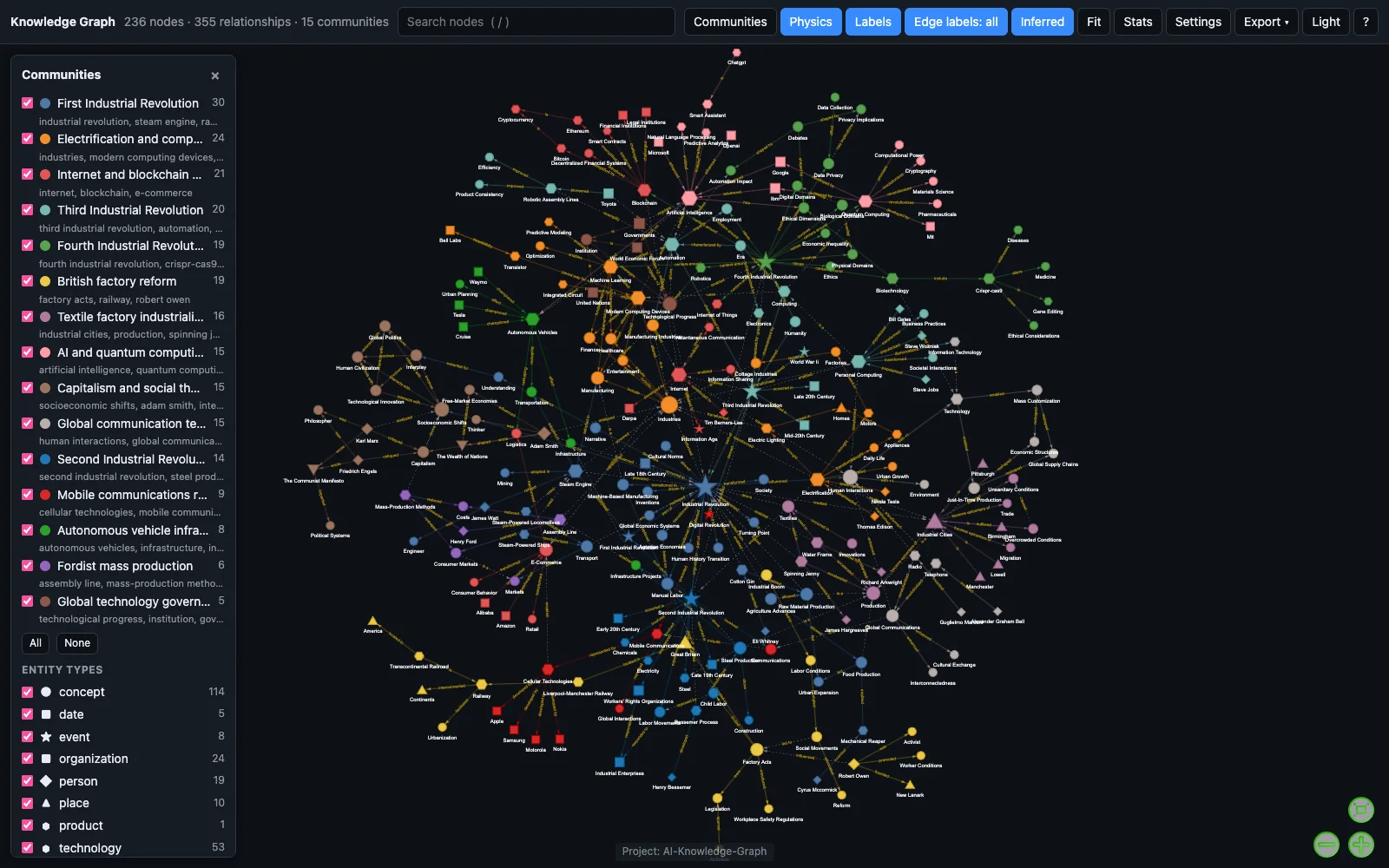
A knowledge graph of the industrial revolutions in AI Knowledge Graph's explorer: 236 entities and 355 relationships colored by community, with the list of named communities and entity types beside it.
Knowledge graphsv0.8.03.1k stars · most popular

AI Knowledge Graph

From unstructured text to an interactive knowledge graph.

A Python tool that reads your documents and uses an LLM of your choice to extract what they say as subject–predicate–object relationships, then draws them as an interactive graph you can search, filter and question.
  • Reads text, Markdown, PDF and Word files in any language, with any OpenAI-compatible model, local or hosted
  • Typed entities, duplicates merged, and missing links inferred conservatively, each one traceable
  • A self-contained HTML explorer with search, named communities, type filters and a shortest-path finder
  • Chat with the graph for cited answers, and export to JSON, CSV, GraphML or Neo4j
robert-mcdermott.github.io/phlox
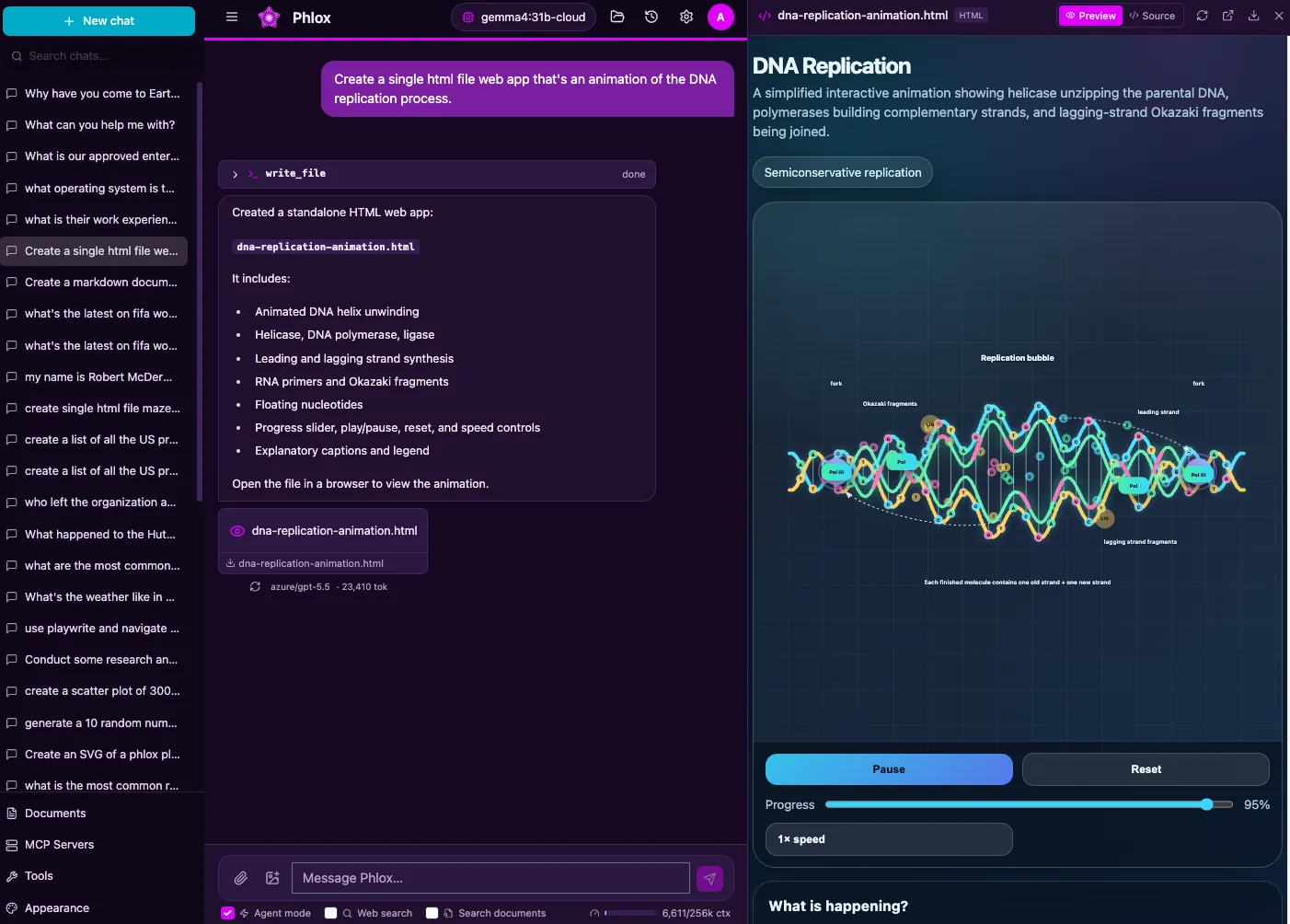
Phlox chat interface generating an interactive DNA replication animation in a canvas beside the conversation.
Self-hosted AI assistantv0.4.0

Phlox

Self-hosted AI agents, research and tools.

A chat platform with an agentic harness, document RAG, code execution, MCP integration and a built-in LLM gateway, running over AWS Bedrock or any OpenAI-compatible endpoint, local or cloud.

  • Research mode over PubMed, NIH RePORTER and ClinicalTrials.gov
  • Cited reports with charts and downloadable datasets

  • SSO, tool permissions, container isolation and usage accounting
robert-mcdermott.github.io/phlox-gw
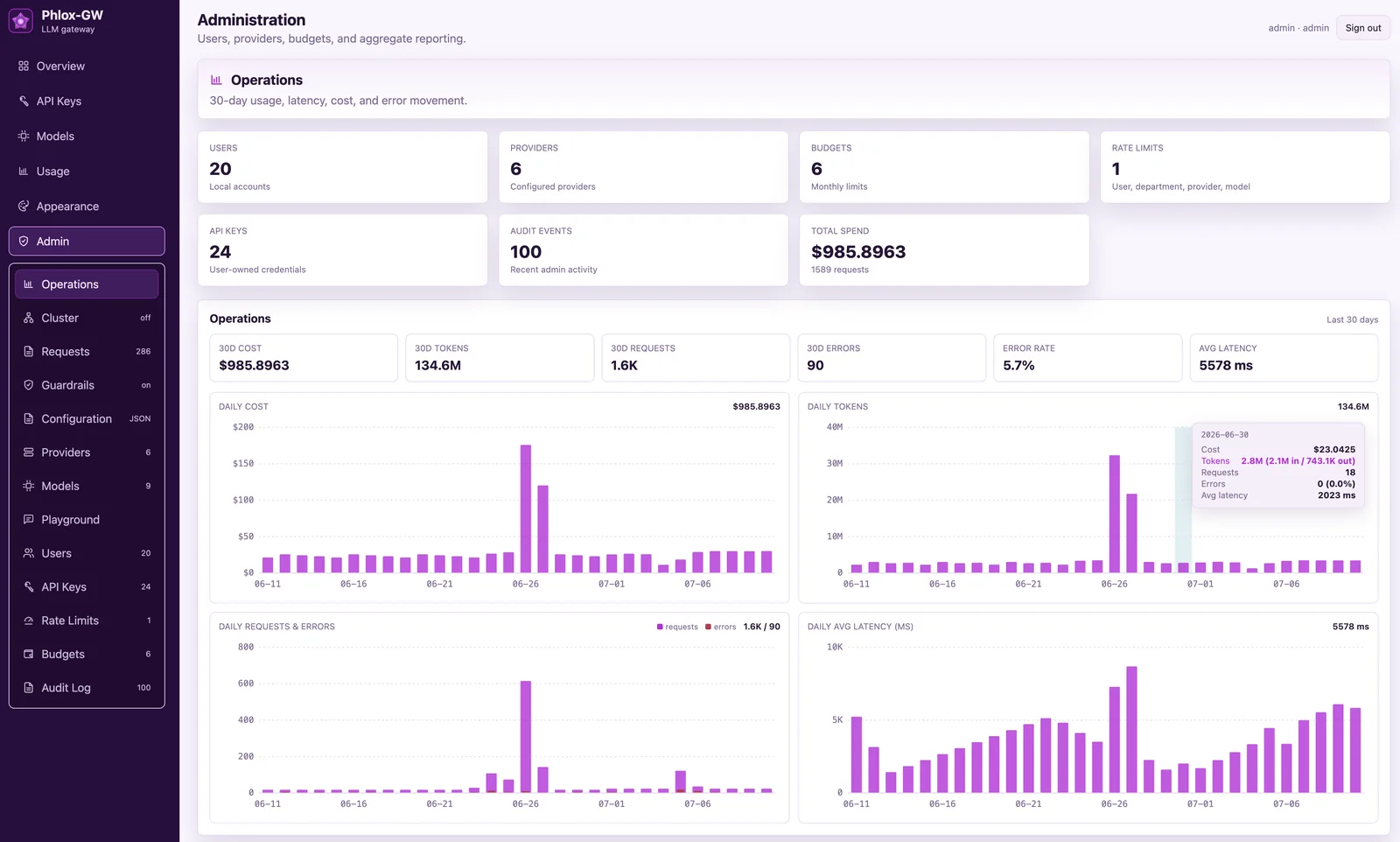
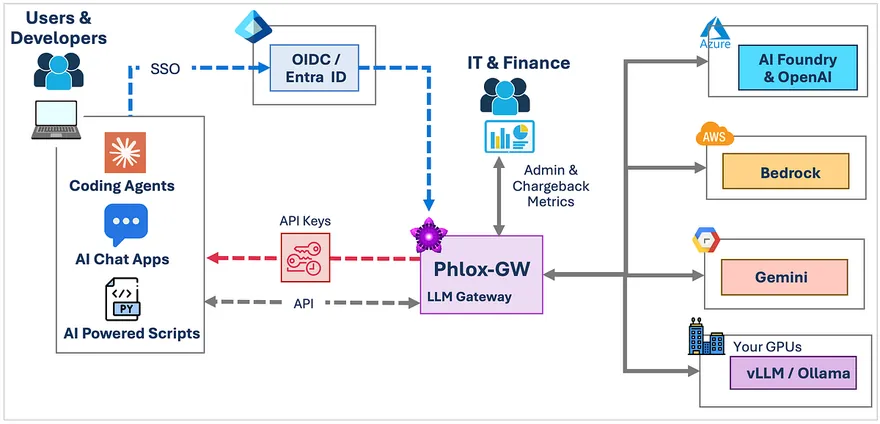
Phlox-GW operations dashboard with request volume, spend and latency charts.
LLM gatewayv0.1.0

Phlox-GW

The enterprise LLM gateway, without the enterprise paywall.

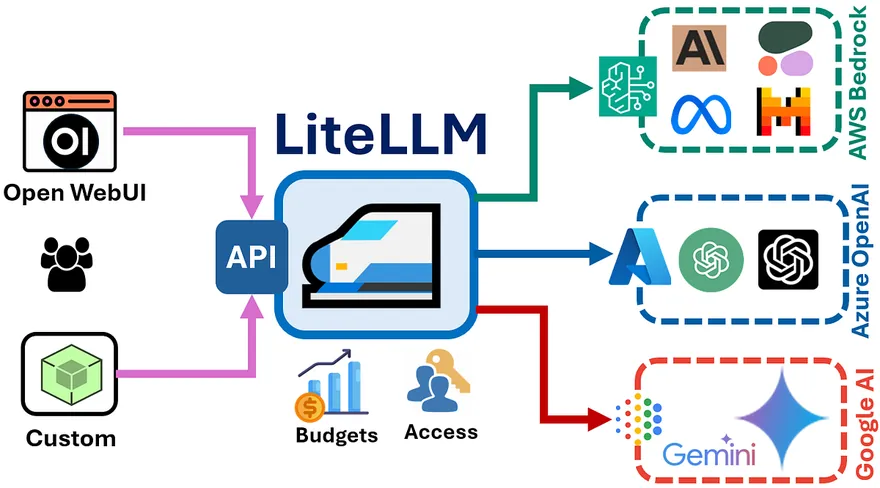
One self-hosted gateway in front of every model provider, with the governance features organizations need, all of them open source.

  • OpenAI, Anthropic, Azure, Bedrock, Gemini, vLLM, Ollama and more
  • SSO, API keys, budgets, chargeback and rate limits
  • Guardrails, audit logs, observability and clustering

Developer & system tools

collomia — ~/projects
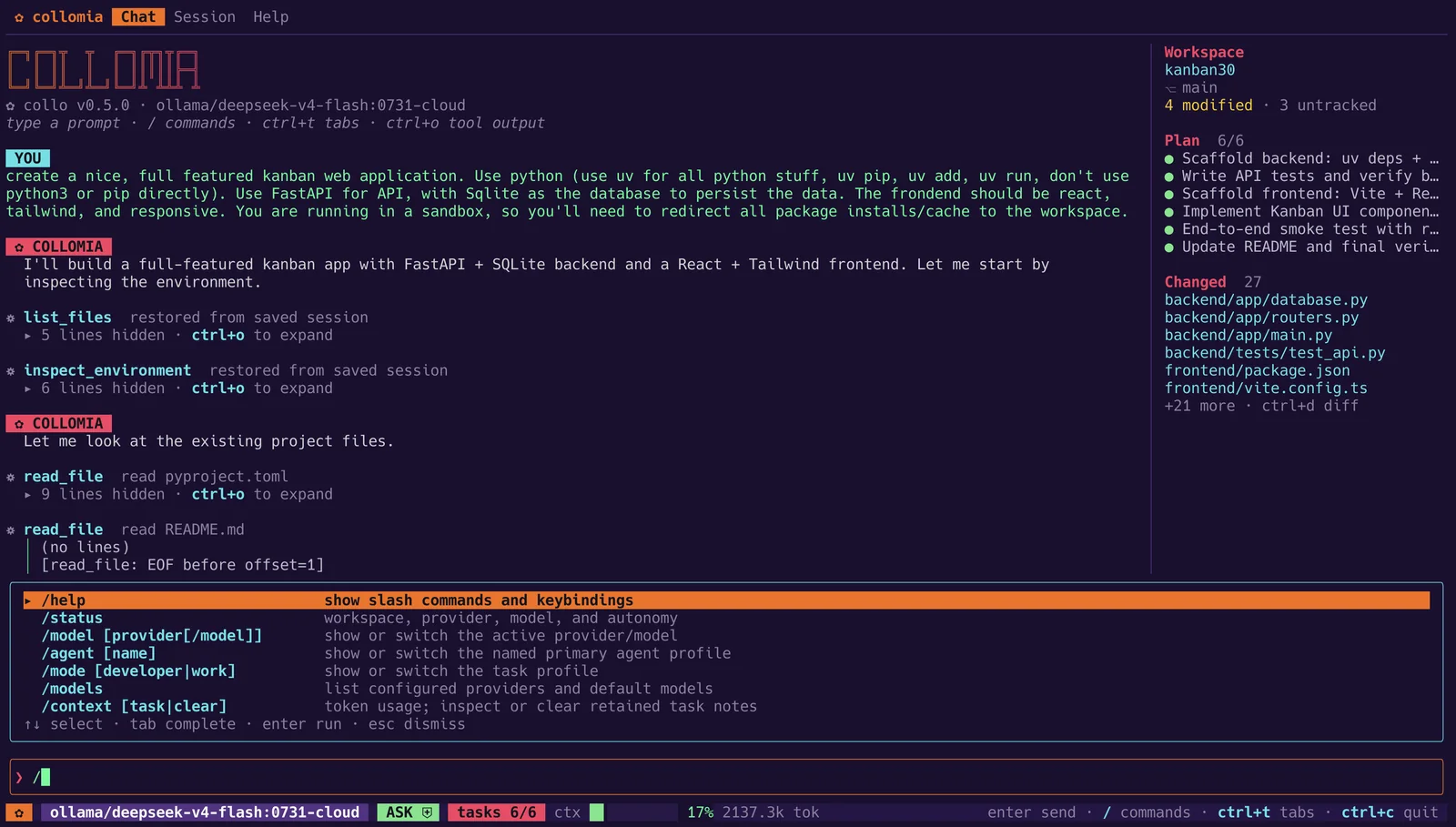
Collomia running in a terminal, planning and building a kanban web application.
Terminal coding agentv0.6.0

Collomia

One terminal agent for code and everyday work.

A provider-neutral agent for development, research, analysis and automation, built so every action the model proposes is checked before it runs. One free binary for macOS, Linux and Windows.

  • Layered permissions, command analysis and OS sandboxing
  • Network controls, an audit ledger and evidence-based completion gates
  • Your choice of local or hosted models, with durable sessions
astrum — ~/projects/inventory
Astrum in a terminal window: three tabs, each marked with what its agent is doing; on the left a failed test run above a server's log; on the right the agent explaining the failure and asking to make the fix, shown as a diff.
Terminal & AI agentv0.6.0

Astrum

A terminal that keeps your place, and an agent that shares it.

A session manager for the terminal with an AI agent built in. It runs inside the terminal you already use, locally or over SSH, as one self-contained file for macOS and Linux, and changes nothing about your shell, prompt or colors.

  • Tabs, panes and shells that keep running after you close the window, and come back after a reboot
  • Full mouse support: click tabs, drag dividers, scroll, and right-click for a menu
  • An agent that works in your own shell, shows each command before it runs, and does only as much on its own as you allow
  • Any model: Ollama, OpenAI-compatible endpoints, Anthropic or Amazon Bedrock, with MCP servers and skills
  • Tabs on other machines over SSH that survive a dropped connection
robert-mcdermott.github.io/moorage
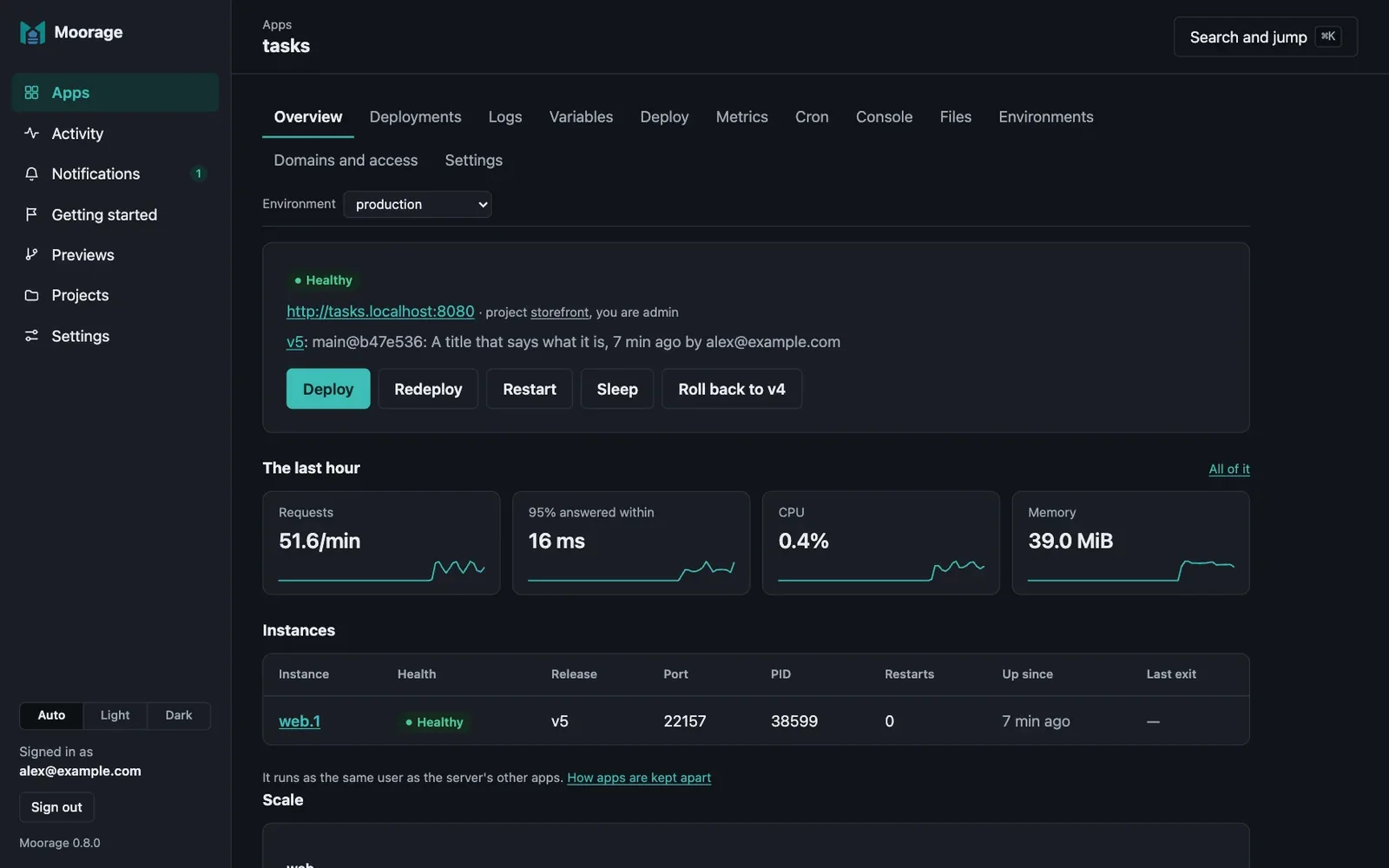
An app's page in the Moorage console: healthy, with its address, release, buttons to deploy, restart and roll back, and the last hour's requests, response time, CPU and memory.
App deploymentv0.10.1

Moorage

Push code. Get a URL. Own the platform.

A self-hosted platform for deploying web apps, in one program. It turns a laptop or a server into your own app platform for internal tools, demos and previews, with no Docker or proxy to set up.

  • Builds Go, Python, Node.js and static sites with no configuration, or from your own Containerfile
  • A live URL for every branch and pull request, from git push, GitHub, GitLab or Gitea
  • A Postgres database or object storage for each environment, included in backups
  • Zero-downtime releases that roll back in a second, with logs and metrics built in
  • Projects, roles, single sign-on and an audit log, with a web console, command line, REST API and an MCP server for coding agents
Switchboard — Globe
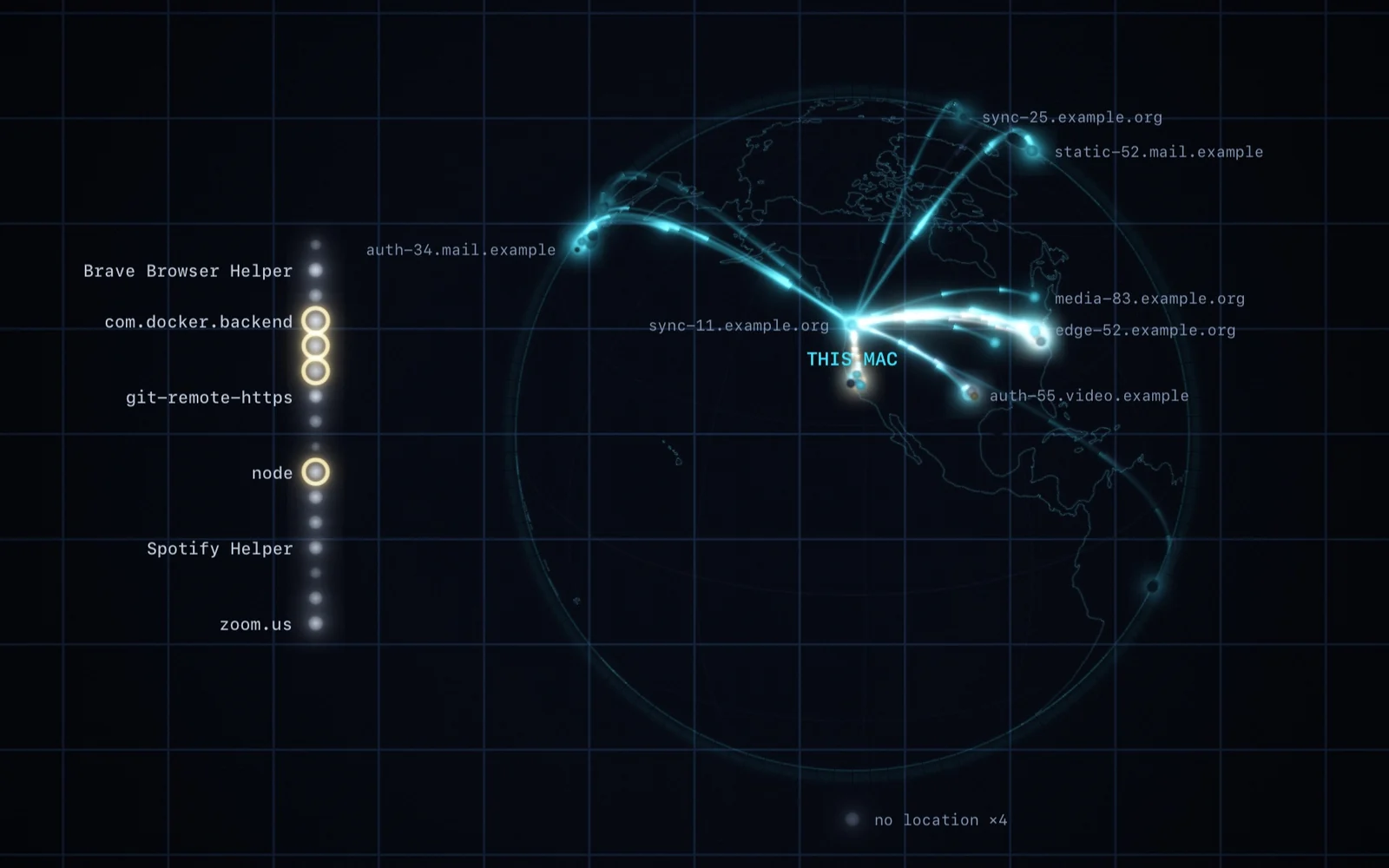
Switchboard's globe view: glowing arcs from this Mac to the places its programs are talking to, with the programs listed on the left and each destination labelled.
Network monitorv0.1.1

Switchboard

See every connection your Mac makes.

A network monitor for macOS that draws a live picture of every connection: which program is talking, to whom, how much, and for how long. It only watches. It never blocks anything, and it sends nothing anywhere. Currently in beta, for Apple silicon.

  • Every connection by program, with hostnames, location, network owner and who signed the program
  • Six views of the same traffic, including a 3D globe and a map of the address space to fly through
  • One filter language for the graph, the tables and the log
  • A timeline to drag back in time, and a searchable local history that exports as CSV or JSON
  • A native Swift app that installs with one command, with no telemetry or update checks

02More open source

Other projects & experiments

Side projects, tools and prototypes, most of them answers to a question I couldn't stop thinking about.

JavaScriptWebGPUGo

Lithosky

A free landscape studio that runs on your computer: eroded mountains, canyon country, forests and meadows, luminous skies and real clouds, path traced on your GPU. It comes with fourteen built-in scenes and renders images up to 4K, with no account and no telemetry.

JavaScriptWebGPU

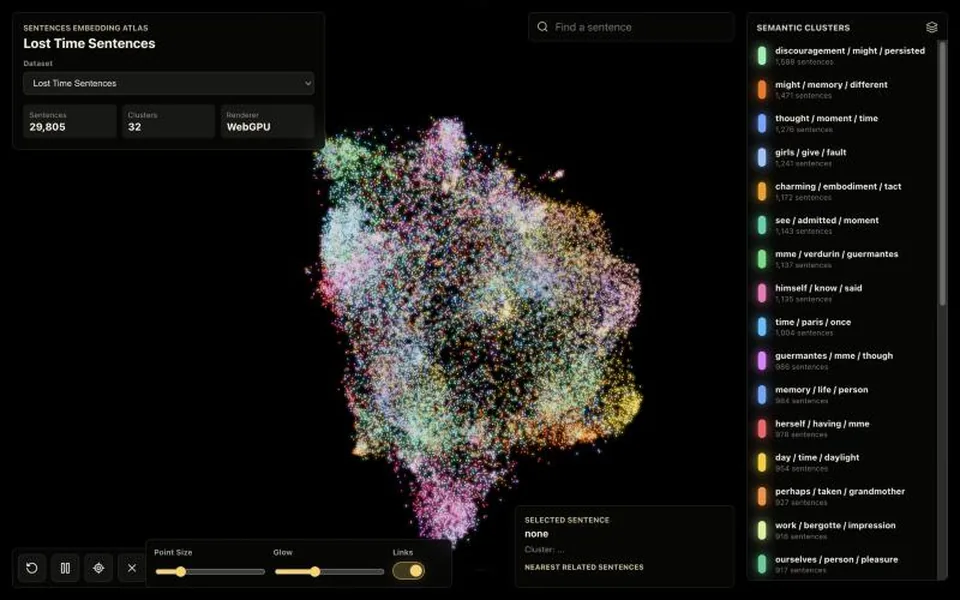
Embedding Atlas

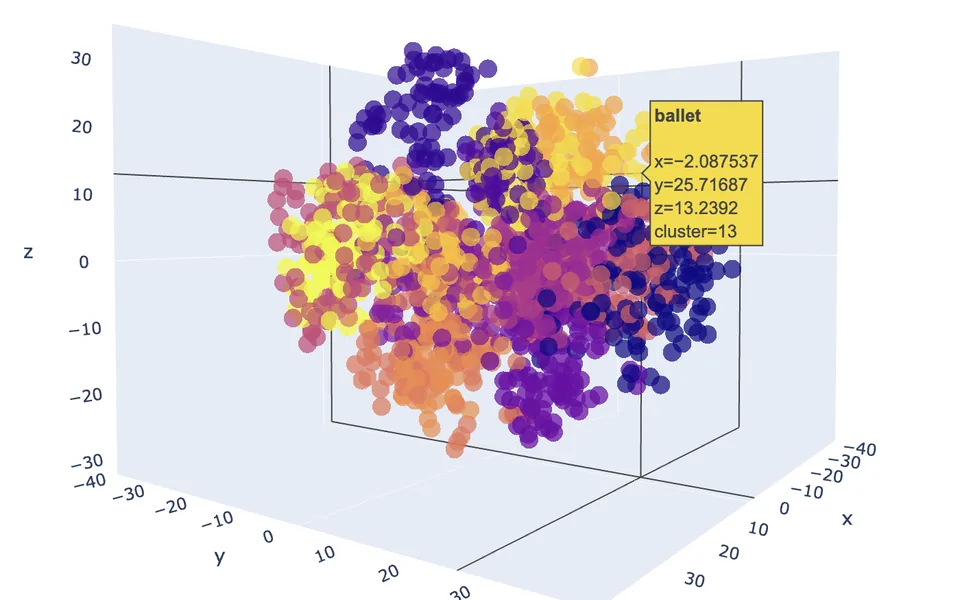
Fly through 29,805 sentences from Proust's In Search of Lost Time, embedded and grouped into 32 semantic clusters, with nearest-neighbor search in the browser.

PythonOpenCV

EyerisAI

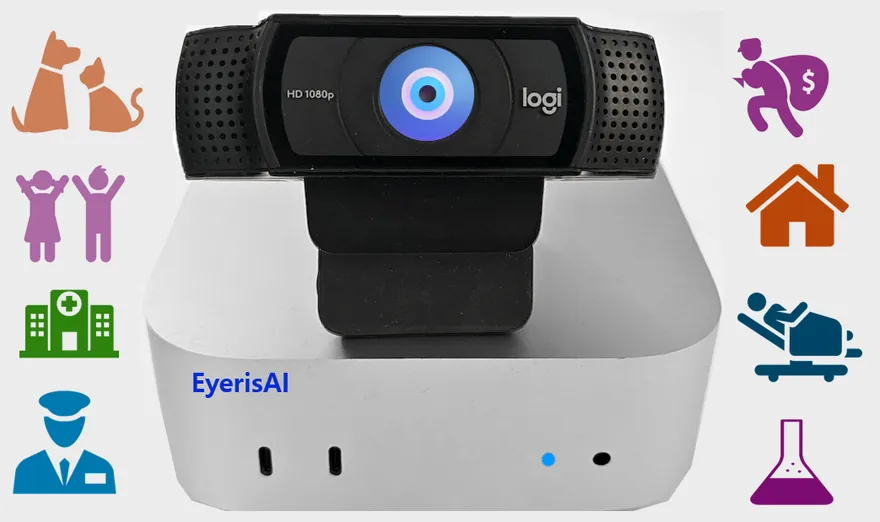
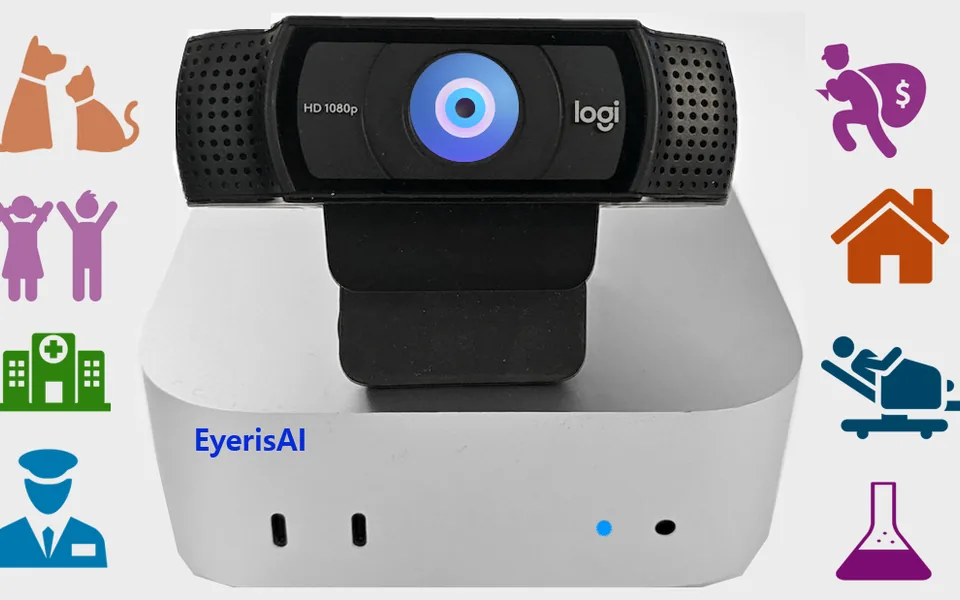
An AI-powered camera that watches for events in real time, such as a fall or an intruder, then uses a vision LLM to describe the scene, log it and respond.

Python

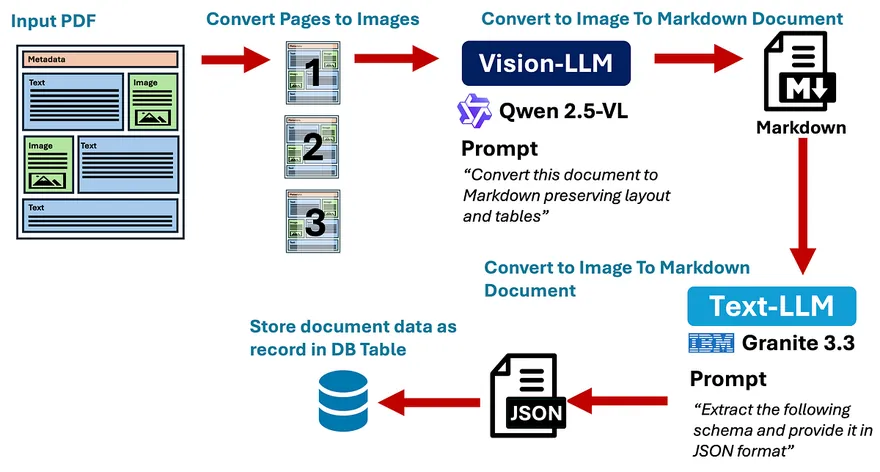
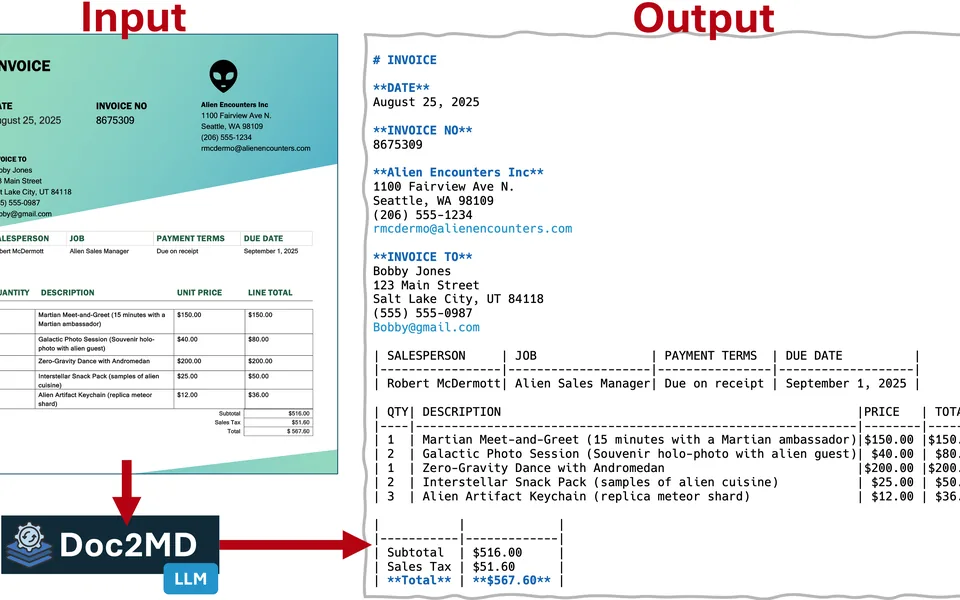
doc2md

Converts images and PDFs to clean Markdown with a vision-capable LLM, local or remote, preserving layout and tables where traditional OCR falls apart.

PythonMLX

Arietta Voice

A private, local-first voice assistant framework for Apple Silicon: wake word, on-device speech in and out, Gemma on MLX, your own knowledge and tools, and a web admin console.

Python

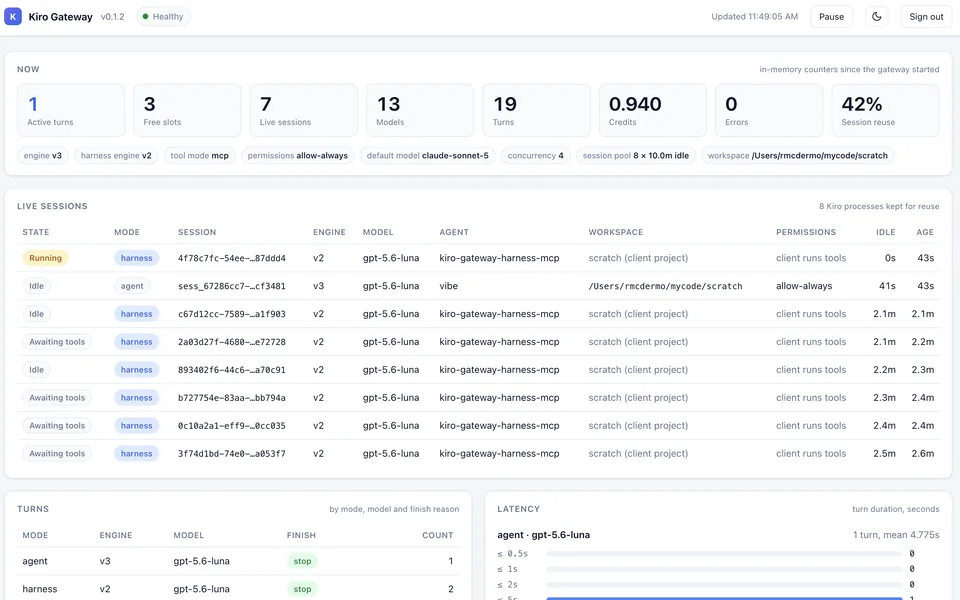
Kiro ACP Gateway

Exposes Amazon Kiro's coding agent through OpenAI- and Anthropic-compatible APIs, so Claude Code, Codex and the SDKs can drive it. Includes a Python ACP client library and CLI.

Pythonword2vec

Embeddings Plot

A command-line utility that projects word embeddings into interactive 2D and 3D plots, so you can see how a model organizes meaning.

135 repositories Everything else is on GitHub Browse them all

03Writing

Articles

Long-form, hands-on articles on running AI yourself, from model serving and gateways to document pipelines, hardware and governance.